
Outdoor solar lighting has evolved beyond simple decor. Today homeowners and property managers are choosing solar lighting solutions for functional illumination, landscaping benefits, and long-term energy savings. But among the many categories available, two popular choices often raise confusion: solar wall lamps and solar post lamps. Both serve different purposes, yet buyers frequently compare them without understanding their strengths, limitations, and ideal use cases. This guide breaks down solar wall lamps vs solar post lamps so you can decide which is better for your home, garden, or commercial space.
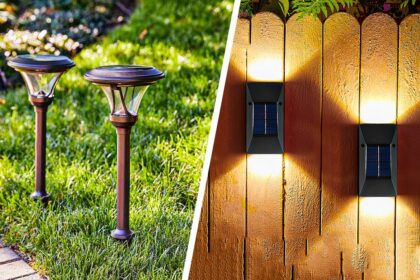
Solar wall lamps are designed to mount on vertical surfaces such as exterior walls, gates, and perimeter boundaries. Their main job is to enhance security, provide pathway visibility, and ensure motion-based lighting at night. Solar post lamps, on the other hand, are mounted on stands, pillars, or garden posts to illuminate driveways, lawns, and pathways with a blend of aesthetics and gentle ambient lighting. Understanding these differences is the key to choosing the right fixture for your space.
What are Solar Wall Lamps?
Solar wall lamps work as directional lights installed on walls or vertical surfaces. They are typically equipped with motion sensors, wider beam angles, and brighter LEDs that activate automatically at dusk. Because they are positioned higher and angled downwards, they can effectively cover entrances, balconies, garages, and walkways. Their weatherproof designs and compact solar panels make them suitable for homes in both rural and urban settings.
Most wall lamps today use monocrystalline panels for efficient charging, which helps them operate even during cloudy conditions. The focus is less on decorative appeal and more on utility. If your goal is better visibility, enhanced outdoor security, or lighting that reacts to human movement, solar wall lamps fit the purpose. They eliminate the need for wiring along walls, making installation simple and cost-effective.
What are Solar Post Lamps?
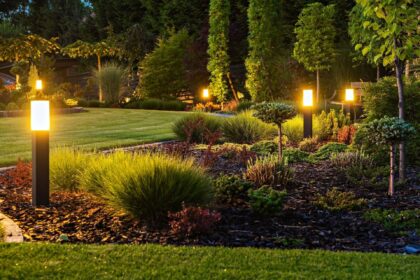
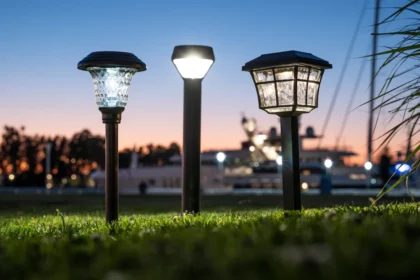
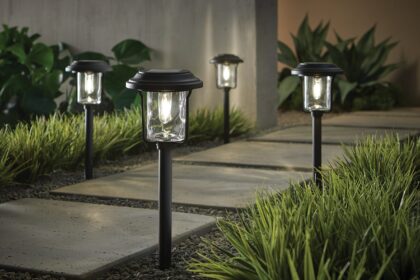
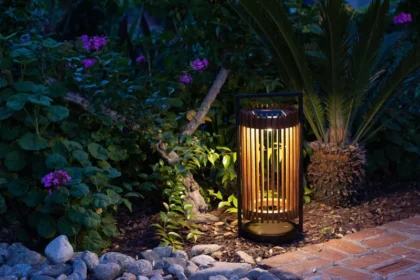
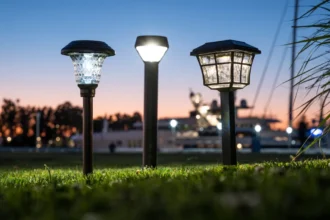
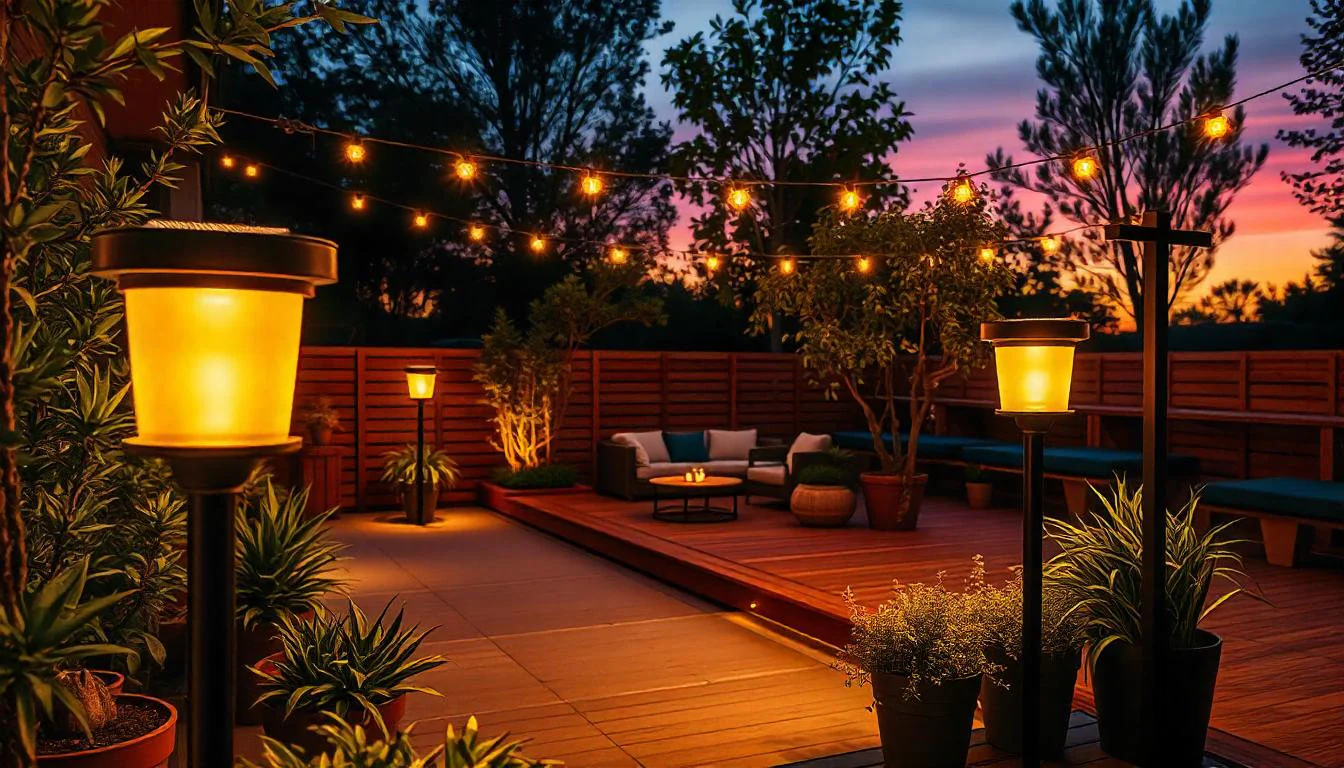
Solar post lamps are mounted on poles, garden stakes, or gate pillars. They deliver more diffused illumination in all directions, making them ideal for pathways and open landscapes. Unlike wall lamps that shine downward, post lamps emit 360° ambient light, improving the overall visual appeal of gardens, lawns, and backyards. Many modern designs resemble classic lanterns or decorative street lamps, adding significant aesthetic value to outdoor spaces.
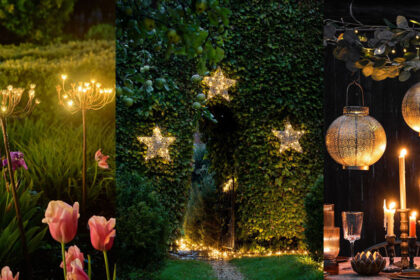
Post lamps are popular among homeowners who want to create mood lighting outdoors without relying on electric wiring. They work well for patios, lawns, farmhouses, terrace gardens, and driveway borders. Their height and placement flexibility allow users to position them where wall lighting isn’t feasible. While not as bright as wall-mounted motion sensor lamps, they offer superior decorative lighting that upgrades the outdoor environment.
Brightness & Coverage Comparison
When comparing solar wall lamps vs solar post lamps, brightness is one of the most important factors. Solar wall lamps tend to offer higher lumen output because they are security-oriented and require brighter light to illuminate wider spaces. Many come with motion sensors that boost brightness temporarily for safety.
Solar post lamps are designed for softer, continuous lighting. Their goal is not to blind users with intense beams but to provide gentle illumination that guides the way and beautifies the landscape. For people who want to highlight garden features, plants, or pathways at night, post lamps perform the job perfectly. For people who want to deter intruders or light up dark entrance zones, wall lamps are more suitable.
Installation Differences
Installation is another point where the two differ. Solar wall lamps require a stable vertical surface and mounting screws. Once installed, they rarely need repositioning. Their integrated design means the solar panel is angled correctly for optimal charging and water drainage.
Solar post lamps offer more flexibility in placement. They can be inserted into soil, mounted on pillars, or fixed along driveway edges. Sellers often offer adjustable heights to match the landscaping features. The ease of moving post lamps around makes them ideal for people who like to redesign their gardens or experiment with outdoor lighting layouts.
Durability & Weather Suitability
Both solar wall and solar post lamps are available in waterproof variants, but their exposure conditions differ. Wall lamps are usually mounted under shades, roofs, or on boundary walls where water can drain easily. This gives them a durability advantage in very rainy or coastal environments. Meanwhile, post lamps face more direct rain, soil moisture, and occasional flooding in gardens. Therefore, IP65 or higher waterproofing becomes essential for long-lasting performance in outdoor landscaping.
Material also plays a role. ABS plastic and aluminum alloys in wall lamps resist corrosion well. Decorative metal designs in post lamps may require rust-proof coatings, especially in coastal cities with high humidity.
Which One Should You Choose?
The choice between solar wall lamps vs solar post lamps depends on your goals. If security, brightness, and motion detection matter, solar wall lamps are clearly the better choice. They offer directed illumination, wider coverage, and practical functionality. But if ambient lighting, aesthetics, and garden enhancement matter more, solar post lamps win. They create atmosphere, guide pathways, and transform outdoor areas into pleasant nighttime spaces.
For many homes, the perfect solution is not one or the other—it is a combination of both. Wall lamps secure entrances and dark corners, while post lamps illuminate lawns and pathways. Together they create a balanced outdoor lighting ecosystem with zero wiring, zero electricity bills, and maximum impact.
Final Verdict
There is no universal winner when comparing solar wall lamps vs solar post lamps. Each serves a different purpose and suits different buyers. Wall lamps provide stronger practical illumination for safety, while post lamps offer aesthetic value and landscape lighting. The smartest choice depends entirely on your space layout, lighting goals, and the type of outdoor experience you want after sunset. As solar technology continues to improve in battery life, panel efficiency, and waterproofing, both categories are becoming increasingly reliable for year-round use in modern homes.