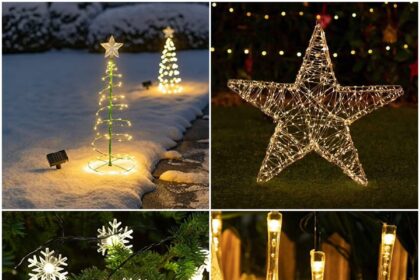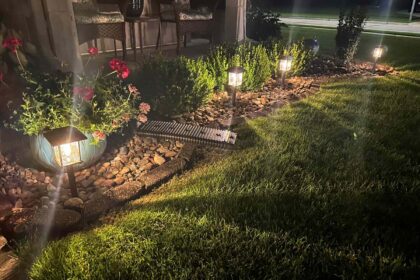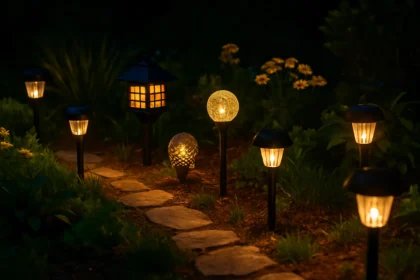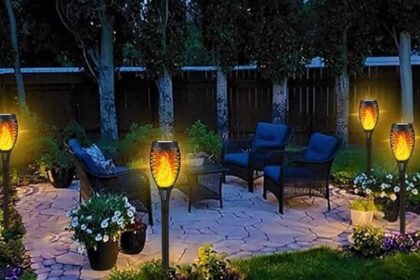

Backyards have become an essential extension of modern living spaces, providing room for relaxation, gardening, social gatherings, and outdoor dining. During the day, greenery and landscaping features bring natural beauty, but once the sun sets, these spaces can lose their character without proper lighting. Many homeowners want to illuminate their backyards in a way that highlights plants, pathways, and seating areas without dealing with wiring or rising energy bills. In this context, the best solar lights for backyard landscaping offer the perfect balance between beauty, functionality, and sustainability. They rely entirely on sunlight, operate automatically at night, and require minimal maintenance throughout the year.
Backyards vary widely in design—some feature lawns and flower beds, others include patios, pergolas, fountains, vegetable gardens, or decks. Solar lighting is versatile enough to adapt to any layout. With options such as path stakes, bollard lights, spotlights, lanterns, and string lights, homeowners can layer illumination to create depth, contrast, and ambiance. What makes solar lighting especially attractive for backyard landscaping is the absence of electrical infrastructure. There is no need to dig trenches, install switches, or run cables across soil and patios. This makes solar lights suitable for both new landscapes and established gardens where homeowners do not want to disturb existing plants or structures.
Why Solar Lighting Works Best for Landscaping
Landscaping is all about enhancing visual appeal and creating usable outdoor environments. Solar lighting supports these goals by offering soft but effective illumination that highlights textures, shapes, and layout elements without overpowering the natural scenery. Decorative lighting can draw attention to trees, shrubs, stone pathways, and seating zones, while functional lighting ensures safety and visibility. Because solar lights turn on automatically at dusk and off at dawn, the backyard becomes usable for longer hours without manual intervention.
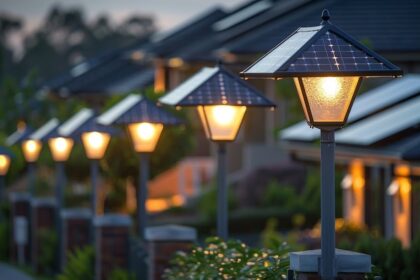
Another reason solar lighting is ideal for landscaping is energy efficiency. Once installed, solar lamps operate without recurring power costs, which is a significant advantage for large outdoor spaces. Premium models come with weatherproof designs, lithium batteries, and monocrystalline solar panels that hold up well during seasonal changes. This makes solar landscaping lights a smart long-term investment for homeowners who want style and convenience without ongoing expenses.
Types of Solar Lights Suitable for Backyard Landscaping
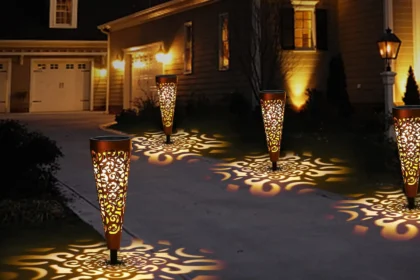
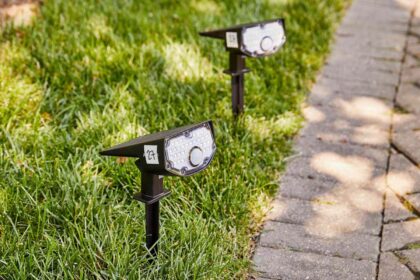
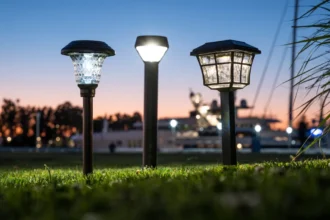
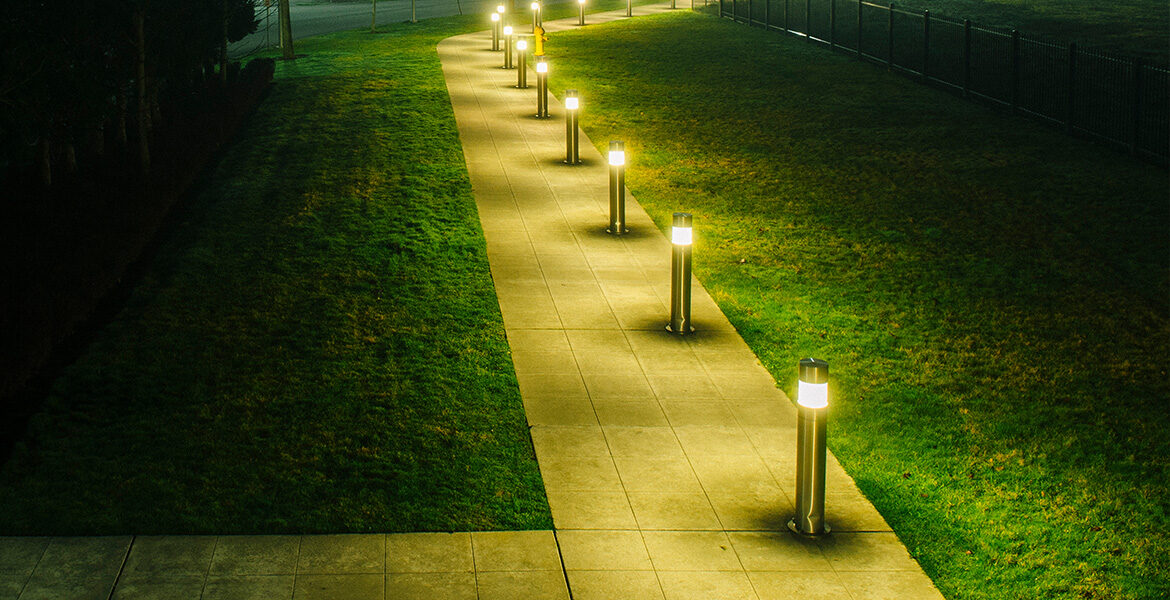
There are several types of solar lights that work particularly well for backyard landscaping, each serving a different visual and functional purpose. Pathway stake lights illuminate walkways and lawn borders, creating guided lighting that makes movement safe and visually appealing. Bollard lights provide a more premium look with stronger brightness and broader coverage, suitable for modern landscaping themes. Spotlights highlight focal points such as trees, fountains, sculptures, or garden beds, adding dramatic lighting effects that enhance depth and dimension at night.
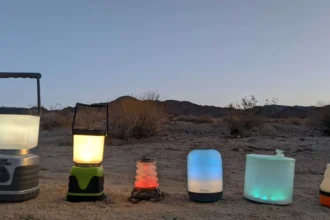
String lights are an excellent option for backyard dining areas, pergolas, deck railings, and patios. They create a warm, inviting ambiance ideal for evening gatherings or family dinners. Lantern-style solar lights can be placed on tables, steps, or pathways to add decorative flair. For homeowners who prioritize security, motion-sensor solar wall lights can be added near gates, back doors, and garages to improve visibility and safety. By combining different categories, backyards can achieve layered lighting that feels professionally designed.
Brightness and Color Temperature Considerations
When choosing the best solar lights for backyard landscaping, brightness and color tone matter as much as design. Landscaping typically favors warm white lighting because it blends naturally with greenery, stone, and wood. Warm tones create a relaxed and cozy outdoor environment that encourages social interaction. Cool white lighting may be preferred for security-focused zones or modern minimalist designs where visibility and sharpness are priorities. Spotlights often use cool white for emphasis, while string and pathway lights work better in warm tones.
Brightness varies depending on the fixture type. Pathway and stake lights usually range between 10 to 30 lumens for soft illumination, while bollard lights may range from 50 to 200 lumens for stronger coverage. Spotlights and floodlights can exceed 200 lumens to highlight major landscape features. The key is balance—overly bright lights can spoil the visual atmosphere, while extremely dim lights may be insufficient for functional use. Layering ensures that each light plays a role without overwhelming the backyard.
Weather Resistance and Durability
Backyard lights need to withstand rain, wind, dust, soil moisture, and temperature fluctuations. Since they remain outdoors year-round, durability is crucial. ABS plastic, aluminum alloy, and stainless steel bodies offer better longevity than thin plastics. Waterproof ratings such as IP65 ensure protection against heavy rain and sprinklers, which is important in gardens with irrigation systems. Monsoon-prone or coastal regions benefit from corrosion-resistant materials that can withstand humidity and salt exposure.
Premium backyard solar lights also use lithium-ion or LiFePO4 batteries that provide longer life cycles and better performance during cloudy days. These batteries maintain stable brightness through the night without fading early. For landscapes with shaded sections, spotlights and bollard lights with external solar panels allow flexible panel placement for optimal charging.
Installation and Maintenance Simplicity
One of the biggest advantages of solar landscaping lights is hassle-free installation. Stake lights push directly into the soil, spotlights mount onto the ground or landscaping structures, and string lights attach easily to pergolas, trees, and patio covers. No electrical expertise is required, which makes solar lighting accessible to homeowners, renters, and even DIY enthusiasts. Repositioning solar lights is easy, allowing landscapes to evolve over time without permanent fixtures.
Maintenance is minimal and mostly involves cleaning solar panels to remove dust, pollen, and pollutants—especially in cities where air quality lowers light absorption. Keeping panels clean improves charging and runtime. Aside from occasional cleaning, there is no wiring to maintain and no bulbs to frequently replace.
Final Verdict
The best solar lights for backyard landscaping offer a perfect combination of ambiance, safety, energy efficiency, and creative expression. They enhance outdoor beauty, extend usability into evening hours, and turn backyards into welcoming entertainment spaces without adding to electricity bills or requiring complex installations. With diverse styles including stake lights, spotlights, bollards, lanterns, and string lights, homeowners can achieve layered and visually stunning landscape lighting tailored to their preferences. As solar technology continues to improve, backyard landscaping with solar lights will become even more affordable, durable, and efficient for modern homes.