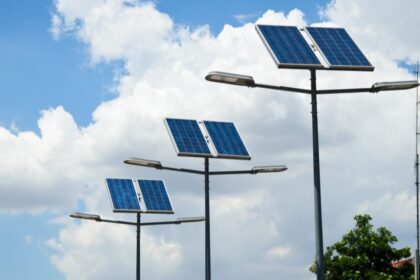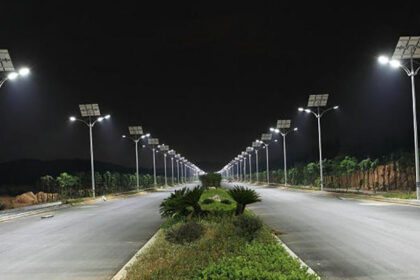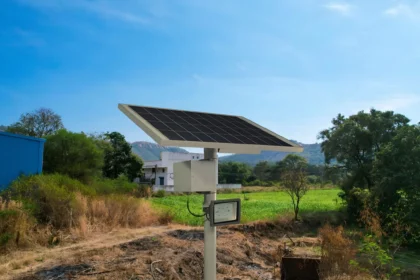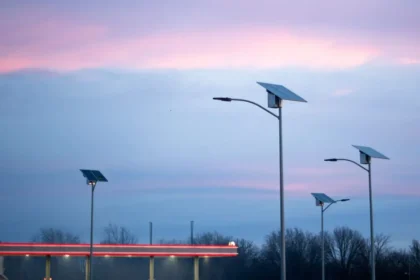




Solar street lighting is quickly becoming an essential part of modern infrastructure across India as cities, rural villages, housing societies, and commercial campuses move toward sustainable and cost-efficient lighting solutions. With improvements in solar panel efficiency, LED technology, battery storage, and smart control systems, today’s solar street lights deliver powerful illumination with zero grid dependency. However, buyers—ranging from homeowners to government departments—often face confusion regarding pricing. This 2026 guide breaks down the solar street lights price in India, explains key cost factors, and helps both commercial and residential users make informed decisions when planning new installations.
The pricing of solar street lights in India varies widely depending on category, wattage, battery type, panel capacity, motion sensing features, and mounting requirements. In 2026, India continues to lead in solar adoption due to abundant sunlight, government subsidy programs, and increased interest in rural electrification. Solar street lights have proven especially beneficial in remote areas where grid infrastructure is slow, expensive, or impractical to install. Beyond rural development, urban housing societies, tech parks, industrial facilities, and commercial complexes are also embracing solar street lighting to reduce electricity bills and improve ESG (Environmental, Social & Governance) compliance standards.
Types of Solar Street Lights and Price Ranges in 2026
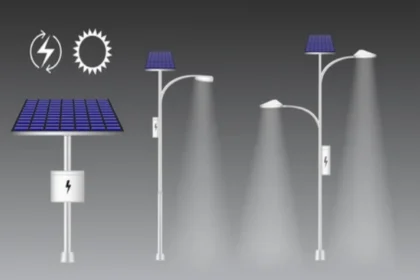
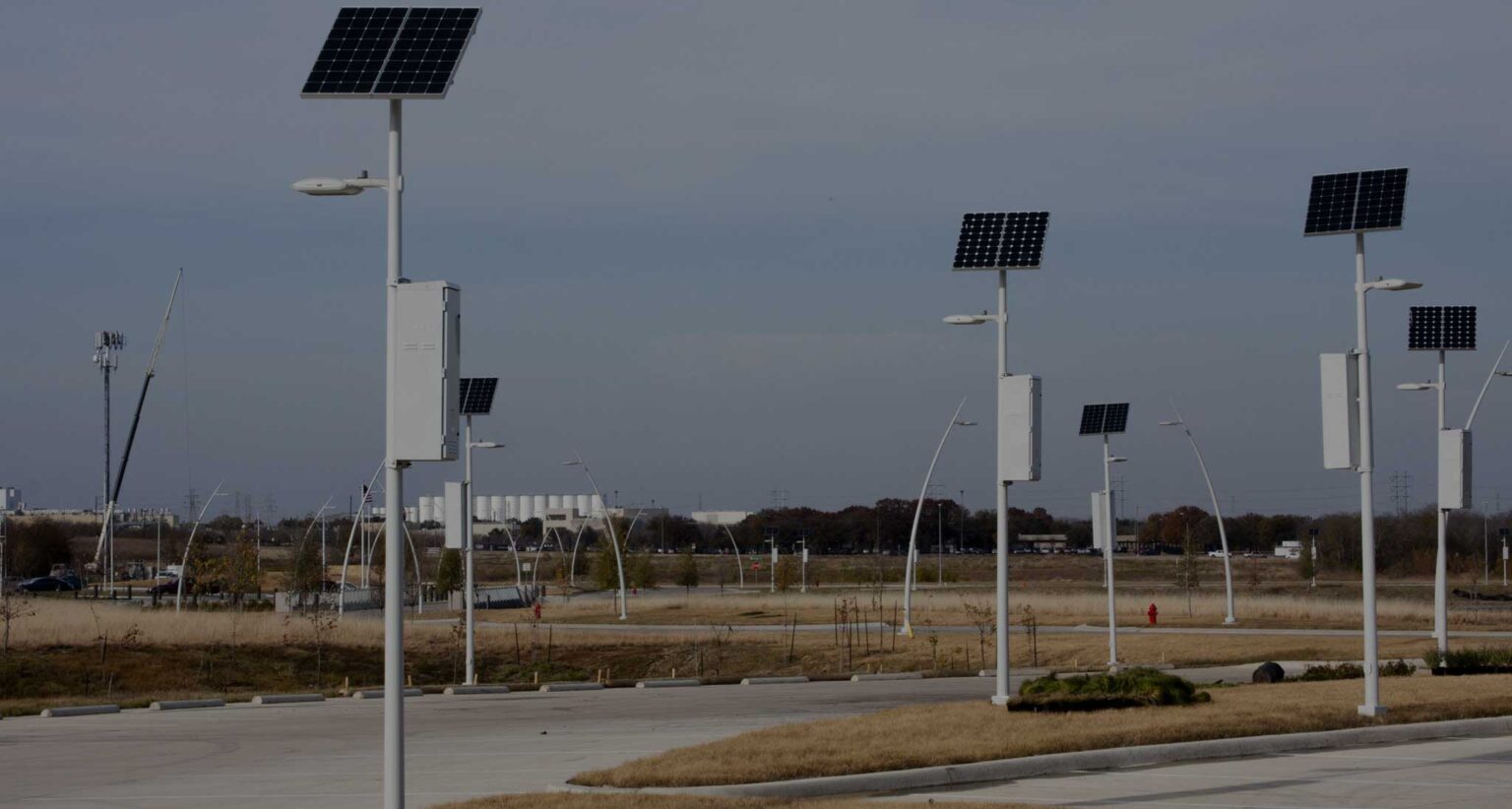
Solar street lighting is available in different structural configurations. The two most common are All-in-One and All-in-Two (Semi-Integrated) systems, each priced according to efficiency and component size. All-in-one models integrate the solar panel, LED light, controller, and battery into a single unit. They are compact and easier to install but offer limited panel size. All-in-two systems use separate solar panels and integrated battery+light units, allowing larger panel capacity and longer runtimes—suitable for high-wattage installations and commercial applications.
In 2026, typical price ranges in India look like this:
- All-in-One Solar Street Lights: ₹6,500 to ₹28,000+ depending on wattage (12W to 60W+)
- All-in-Two Solar Street Lights: ₹15,000 to ₹85,000+ depending on power category (20W to 120W+)
- Solar Flood Light Kits for Streets: ₹7,000 to ₹30,000+ depending on lumens and battery size
These ranges may vary with brand, build quality, certifications, and after-sales support.
Key Factors That Affect the Pricing
The solar street lights price in India is influenced by multiple technical components. One major cost driver is the solar panel itself. Monocrystalline panels are more efficient and charge better during cloudy weather than polycrystalline panels, but they cost slightly more. Panel wattage also matters; a higher panel capacity ensures faster charging and longer lighting hours, especially in monsoon seasons.
Another critical component is the battery. Lithium-ion and LiFePO4 batteries dominate in 2026 due to better charging efficiency, longer cycle life, and improved heat tolerance. LiFePO4 batteries are more expensive but offer superior durability, making them ideal for Indian weather conditions. Older lead-acid batteries are cheaper but heavier, slower to charge, and shorter-lived, making them less common in new installations.
The LED driver and chip quality also influence pricing. High-lumen LED chips from reputable brands offer better brightness with lower power consumption. MPPT charge controllers, which optimize solar charging, increase performance but add to cost. Housing materials (aluminum vs ABS), IP waterproof ratings, and sensor technology further affect final pricing.
Price Comparison: Residential vs Commercial Usage
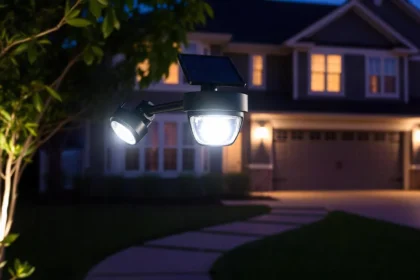
Residential buyers, such as housing societies or independent homeowners, typically install lower-wattage integrated models for internal streets, walkways, and parking areas. These systems are more compact and affordable because they do not require very high lumen output. For example, an internal society street may only need a 20W to 40W all-in-one unit.
Commercial and government buyers require higher wattage systems for public roads, highways, industrial campuses, and rural electrification. These installations often use 60W to 120W+ systems with tall poles (8m–10m), larger panels, and strong battery backup. The pricing increases due to higher power, bigger panels, and longer light durations.
Thus, while residential street lighting budgets may range between ₹10,000 and ₹60,000 per pole, commercial or municipal installations with high-wattage units and taller GI poles may cost ₹40,000 to ₹1,50,000+ per pole depending on specifications.
Pole & Installation Costs in 2026
Many buyers overlook pole and installation costs when budgeting. Solar street lights can be mounted on existing poles if available, but often new GI (Galvanized Iron) poles must be installed. The cost of a typical 5m–10m pole ranges from ₹4,500 to ₹18,000 depending on height, thickness, and foundation requirements. Installation charges include foundation work, civil labor, and bracket fitting, typically adding ₹1,000 to ₹6,000 per pole.
Rural and government projects often require tender-grade quality poles with anti-corrosion coating and engineered foundations, making installation more expensive but long-lasting.
Regional Pricing Trends in India
Pricing varies across regions due to logistics, transportation, and local vendor availability. For example, solar street lights may cost slightly more in Northeastern and Himalayan states due to transportation difficulty, whereas states like Rajasthan, Gujarat, Maharashtra, and Tamil Nadu benefit from strong solar supply chains and manufacturer presence. Cities with high industrial demand such as Pune, Bengaluru, Hyderabad, and Noida often see competitive pricing due to larger project volumes.
Government tenders and subsidies also influence how solar projects are priced in different states. Programs under MNRE (Ministry of New and Renewable Energy) and state-level solar missions continue to drive adoption across rural electrification zones.
Long-Term Value vs Initial Cost
While the upfront solar street lights price in India may seem higher than traditional wired lighting, the long-term savings are significant. Solar street lights have zero electricity bills, minimal maintenance, and no wiring infrastructure. Traditional street lighting, on the other hand, requires trenching, conduits, cables, poles, control panels, and ongoing electricity supply—resulting in high operational costs. Over a 5–10 year period, solar lighting often proves more economical, especially for large campuses, societies, and government deployments.
The lifespan of components also impacts long-term value. LED modules can last 50,000+ hours, LiFePO4 batteries often last 5–7 years, and solar panels can function for 20+ years with slow degradation. This makes solar street lighting suitable for both long-term planning and sustainability goals.
Final Verdict
The solar street lights price in India (2026 guide) reflects a maturing market where technology, efficiency, and durability have significantly improved. Buyers should evaluate wattage, battery type, solar panel quality, waterproofing, mounting requirements, and vendor support instead of focusing solely on price. For residential societies, campuses, government bodies, and rural electrification missions, solar street lighting offers an unmatched combination of reliability, independence from the grid, and long-term cost savings. As India continues to expand its renewable energy infrastructure, solar street lighting will remain a practical and financially sensible choice for illuminating public and private spaces.